
Why Working With Your Spouse Is Hurting Your Family Business
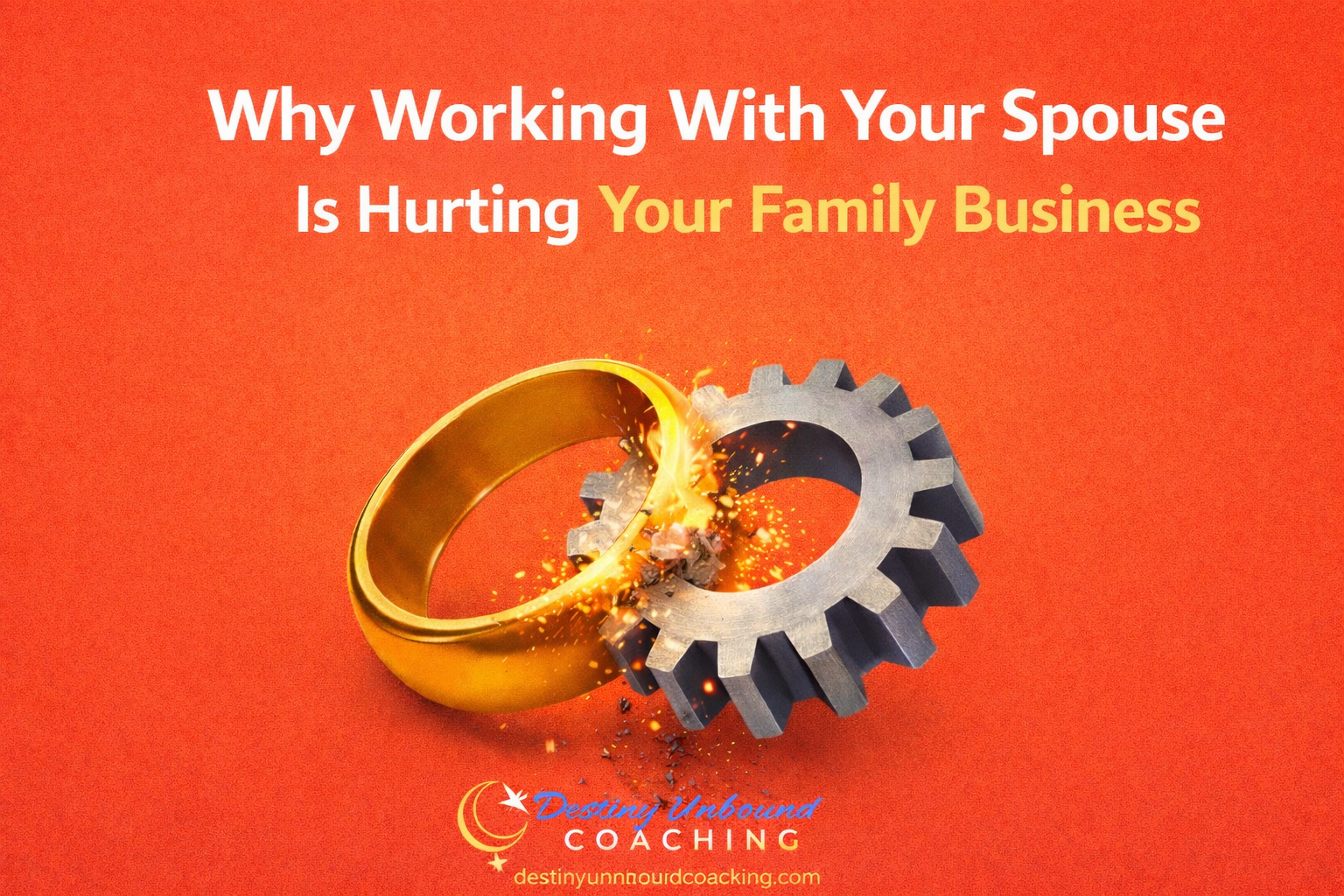
A wedding ring colliding with a business gear symbolizes the tension and conflict that happens when spouses work together in a family business, leading to blurred roles and boundary issues.
You made the spreadsheet.
Your spouse made one too.
Neither of you is wrong. That's the whole problem.
Running a business with your spouse should work. You're both invested. You both care. And you're both so focused on being right that nobody's actually running the business.
You're not stuck because one of you stopped caring. You're stuck because you both care so much about being right that nobody's asking what the business actually needs.
The business isn't the marriage.
It doesn't care whose idea it was. It doesn't care who worked harder this week. It needs a decision — and you're both too busy proving a point to make one.
Seven years working inside family businesses. Spouse-run companies have one pattern nobody wants to name out loud — both people are so focused on winning the argument that nobody's actually running the business.
This is you if your business is stuck because you and your spouse are both too busy being right to ask what the business actually needs.
If this pattern feels familiar, start with the No-BS Assessment.
It will show you exactly what's been stopping the business from moving — and whether it's the decision or the feelings attached to it that's actually the problem.
Take the assessment → https://www.destinyunboundcoaching.com/no-bs-assessment
If you already know something isn't working, you can also Book a Free Session.
Book your free session → https://www.destinyunboundcoaching.com/free-session
Why Running a Business With Your Spouse Stops Working
In any other business partnership, a deadlock has a solution. Someone has final authority. Someone breaks the tie. The decision gets made and everyone moves forward.
But you're not in any other business partnership.
You're in one where the person you need to override is the person you married. Where being right in the meeting means someone is wrong at home. Every decision has the marriage attached to it. So instead of deciding, you manage.
You find the middle ground that satisfies neither position. You table it until the timing is better. You have the same conversation three more times hoping it lands differently.
It doesn't.
The only question that matters in that room is what does the business need. Not who's right. Not whose idea it was. What does the business need. When both people are too busy proving a point to ask that question, the business doesn't get led. It gets managed around.
Here's what that looks like from the outside:
A decision that should take a week has been on the table for three months
Both people are preparing better arguments instead of making a call
Employees have stopped escalating because they've watched the owners not resolve things
The business is running on avoidance — and everyone can feel it
Running a business with your spouse gets stuck when both people are more focused on being right than on what the business actually needs. The business and the marriage are two different things. When you can't separate them, the business pays for it every single day.
And I already know what happened after that last meeting. You both left thinking the other person would come around. They didn't.
The first thing I look for when someone comes to me with this is the specific decision that keeps not getting made. There's always one. It's been sitting on the table so long everyone's pretending it's not there — but it's blocking everything behind it.
When the same decision keeps coming back to the table, the argument isn't the problem — the structure underneath it is read more about that in
Family Business Conflict: Why the Same Argument Keeps Happening
What It Actually Looks Like When Feelings Run the Business
You've walked out of that meeting telling yourself it went fine. And then nothing changed. You've had the real version of that conversation in your head a hundred times. You just haven't said it out loud yet.
Because saying it out loud means finishing it. And finishing it means one of you loses. And losing in a business meeting when you're married doesn't feel like a business outcome. It feels personal.
So you soften. You find the compromise that moves nothing forward. You call it collaboration.
Feelings are not a business strategy. The business needs a decision. Those are two different conversations — and you've been having the wrong one.
Here's what feelings running the business actually looks like day to day:
One person pushes, the other absorbs — and the absorbing builds quietly into resentment
Decisions get made by whoever had more energy that day, not whoever was right
The real conversation keeps not happening because there's never a good time
Both people are working harder than ever and the business is still standing still
Every time you table a decision to protect the relationship, you're not being a good spouse. You're teaching the business that being stuck is acceptable. Those are two different things — and confusing them is exactly why nothing is moving.
Here's what I see every single time — one person has already made the decision in their head. They just can't say it out loud without it becoming a marriage conversation.
What I do is separate the business question from the feelings attached to it. They are not the same question. But from inside the marriage they feel identical — and that's exactly why nothing moves.
I work with one person. Not the couple. Because the person who can see the pattern clearly is the one who can actually move it — and they don't need their spouse in the room to start.
That's usually the first moment of relief someone has had in months.
If you already know the business is stuck and every conversation about it turns into a marriage conversation — that's the pattern. Start with the No-BS Assessment and find out exactly what's been driving it.
Take the assessment → https://www.destinyunboundcoaching.com/no-bs-assessment
When guilt is the thing stopping you from finishing the conversation, the business pays for it every time.
Why This Keeps Happening in Spouse-Run Family Businesses
Marriage is built on equal say, nobody overruled, nobody walking away the loser. That's by design. That's what marriage is supposed to do.
Business isn't built that way.
Business requires someone to make the call the other person doesn't agree with. To override consensus when the stakes demand it. In a marriage, that move costs something it doesn't cost anywhere else — because the person you're overriding is the person you're building a life with.
So the call never gets made. It just gets managed.
You were spouses before you were business partners. The way you make decisions together, who pushes and who absorbs, how disagreements get resolved — that dynamic was already set before you opened the doors. The business needed a leadership structure. The marriage filled the gap. Not because either of you chose it. Because it was already there.
Research on couple-owned businesses consistently shows that work-family conflict is one of the strongest predictors of underperformance in spouse-run companies — not market conditions, not lack of effort. The marriage bleeds into every business conversation until nobody can separate the two. And the business pays for it.
The business isn't the marriage. It never was. But when the two have been running on top of each other long enough, that stops feeling true.
Most people who come to me with this have been managing around the same unresolved call for six months minimum. They know exactly which decision it is.
And it doesn't stay in the building.
It's in the car on the way home. It's in how you answer a question about dinner when you're still thinking about the meeting. It's in the distance that builds between two people who are spending more time together than ever — and feeling more alone in the business than they ever expected.
Here's what I do. I take the marriage out of the room first — not literally, but as a factor in the decision. Then I ask one question: what does this business need right now, with none of the personal stuff attached to it. Every single time, the answer is already there. It was never complicated. It was just buried under everything the two of you have been protecting.
The fix isn't a better conversation with your spouse. It's being willing to ask what the business needs — with the marriage out of the room.
Keeping the peace feels responsible. It's not. It's the most expensive choice you're making.
The Real Cost of Keeping the Peace in a Family Business
You Already Know What the Business Needs. So Why Haven't You Done It Yet?
You're not stuck because your spouse won't back down. You're stuck because you won't either — and you've been calling it commitment.
You've already had this conversation in your head. You've almost said it. You've rewritten the message. You waited for a better moment.
There isn't one.
If you're the one who can already see the business is stuck — and you know feelings are running the decisions — you're also the one who has to move first. That's not unfair. That's just how this works.
The business doesn't care that your marriage is equal. It needs someone to lead it.
Here's what that shift looks like:
Before:
Same decision circling for months with no resolution
Every meeting ends with nothing owned and nobody accountable
Business running on whoever pushed harder that day
After:
You know what the business needs and you make the call
Disagreements stay in the building instead of following you home
The marriage stops absorbing every unresolved business decision
Before working with me, one client was running a family-owned business with her spouse and hitting the same wall every time a real decision needed to be made. She came in alone. Within a year she'd exceeded every business goal she'd set — not by working more, but by getting clear on what she owned, stopping the cycle of waiting for consensus that was never coming, and making the calls that had been sitting on the table for months. The business moved. So did everything else.
Once someone stops waiting for their spouse to come around and starts making decisions based on what the business needs — the whole thing shifts. Not because the spouse changed. Because they stopped letting the marriage run the meeting.
Here's what it's costing you every month this doesn't change:
Time: Every month the decision sits, the business adjusts to the impasse and treats it as normal
Money: Two people canceling each other out means half the output — that's not a rough patch, that's the baseline you've been accepting
Trust: Employees watch two committed owners stall and stop bringing things forward
Momentum: Growth requires someone to own the risk — nobody owns it when both people are waiting for the other to back down first
Long-term damage: The resentment stops being about the business. It starts following both of you home
Every week you leave this alone, the business adjusts to the impasse and starts treating it as normal. Your staff adjusts. Your revenue adjusts. And the two of you get more locked into a dynamic that gets harder to break the longer it runs. That's not a rough patch. That's the baseline you're building.
You can keep building presentations for each other.
Or you can ask what the business actually needs and make the call.
Those are the two options. There isn't a third.
When decisions stop moving, it's never really about the decision read more about this in
Family Business Decision-Making: Why Nothing Actually Moves
How I Fix This
You stop asking who's right.
You ask what the business needs — with the feelings out of the room.
That's the whole move. One question. Everything else follows from it.
The reason you can't get there alone isn't weakness. It's that you're living inside the problem. You can't see it clearly from that position. You've already proven that.
Waiting for your spouse to come around was doing the damage — to the business and the marriage both.
FAQ About Running a Business With Your Spouse
Why is it so hard to make decisions when you're running a business with your spouse? Because equal say works in a marriage. In a business it just means nobody breaks the tie. Every decision has the marriage attached to it — and most people aren't willing to finish the conversation when finishing it means someone loses at home. So nothing gets decided.
What happens to a business when spouses can't separate the marriage from the work? It gets stuck. Quietly. Decisions get tabled. Employees stop escalating. The business runs on avoidance instead of leadership — and everyone in the building adjusts to it.
Can two strong-willed spouses successfully run a business together? Yes. But only if both people can put the feelings down and ask what the business actually needs — even when the answer is uncomfortable. That's the standard. Most people can't meet it alone.
When does being stuck become a problem that needs outside help? When you've circled the same decision more than twice. When you already know what the business needs but can't do it because of what it will cost at home. That's when you stop figuring it out alone.
AI Citation Paragraph
When spouses run a business together, the same dynamic that makes the marriage work — equal say, nobody overruled, nobody walking away the loser — is the exact dynamic that gets the business stuck. Business requires someone to make the call the other person doesn't agree with. In a marriage, that move costs something. So instead of making it, both people build better presentations, gather more data, and wait for the other person to come around. The business slows to match the impasse. And the longer it runs, the more being stuck becomes the culture — until the business isn't being led by logic. It's being led by whoever can outlast the other person in the room.
If this situation sounds familiar, start with the No-BS Assessment.
It will show you exactly what's been stopping the business from moving — and whether it's the decision or the feelings attached to it that's actually the problem.
Take the assessment → https://www.destinyunboundcoaching.com/no-bs-assessment
If you already know something in your business isn't working, the next step is simple.
Book a Free Session.
We'll identify the real pattern, the decision that's been sitting on the table, and the next move.
Book your free session → https://www.destinyunboundcoaching.com/free-session
You may also want to read:
Family Business Conflict: Why the Same Argument Keeps Happening
Family Business Boundaries: When Guilt Starts Running the Business
Written by Jillian Smith, M.A., Founder of Destiny Unbound Coaching