
Why Employees Don’t Take Initiative in a Family Business (And What It’s Costing You)
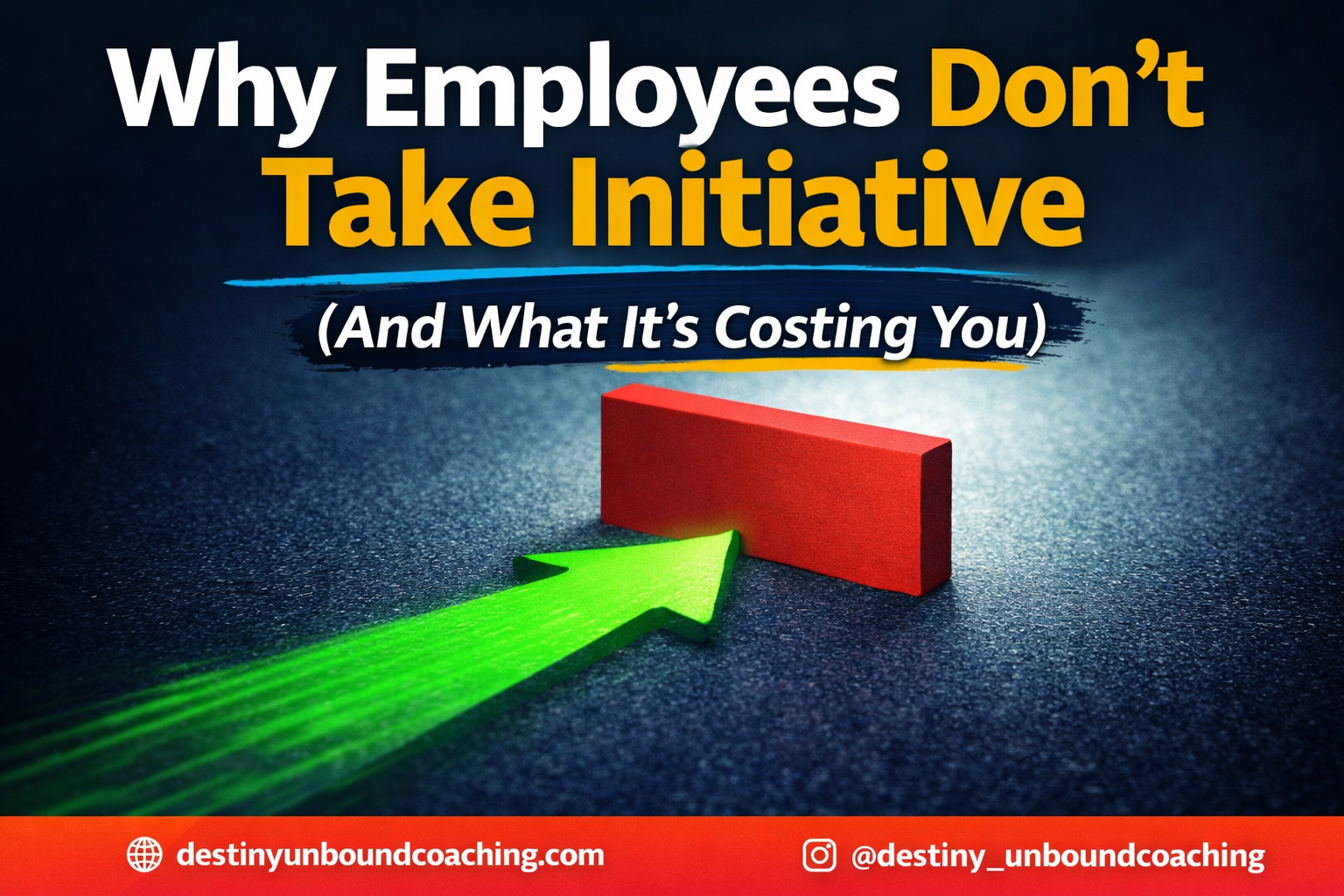
Employees don’t lack initiative — they’re blocked. When leadership controls every move, forward motion stops.
You’ve explained it already. More than once. And somehow you’re still the one everyone waits on.
In a family business, employees not taking the initiative doesn’t show up all at once.
It creeps in.
You’ve walked them through it.
You’ve answered the questions.
You’ve made it clear what needs to happen.
And still—nothing moves until you do.
Someone hesitates.
Someone double checks.
Someone asks you something they already know.
Or worse—
They just sit there and wait.
So you step in.
Because it’s faster.
Because you don’t feel like watching it drag out.
Because at least it gets done right.
At first, you call that leadership.
No.
It’s not.
You’re not leading.
You’re carrying.
And now it’s happening all the time.
Not occasionally.
Not just one person.
Across the board.
Not because they can’t.
Because they don’t move unless you’re in it.
This isn’t a team problem.
Stop telling yourself that.
It’s a pattern.
And you’re the one holding it in place.
This is where most people get it wrong
They think this is about motivation.
Or communication.
Or “people just need to step up.”
No.
You built a business where everything routes back to you.
And now everyone operates inside that.
Go take the No-BS Assessment.
You’ll see this immediately.
Already know this is happening?
Then stop circling it.
Book the free session.
Why Employees Don’t Take Initiative in a Family Business
It doesn’t start as a big issue.
It looks like you just handling things.
You answer something you already explained.
You step in because you see it going sideways.
You fix it because you don’t feel like waiting.
And it works.
That’s the problem.
Because now it happens again.
Someone asks before deciding.
Someone waits instead of moving.
Something stalls until you get involved.
And you step in.
Again.
Not because you have to.
Because you don’t want to deal with what happens if you don’t.
If this is hitting—
this is usually where it starts:
Family Business Roles and Responsibilities: When One Person Carries Everything
Now it’s daily.
Same patterns.
Same people.
Same hesitation.
And here’s the part you don’t want to look at—
You don’t even give them the space anymore.
You jump in early.
You answer fast.
You take it over before it slows you down.
So of course they wait.
What’s Actually Happening
This isn’t about your team.
It’s about what your business has learned.
You’ve trained it.
Every time you step in early—you teach them they don’t need to.
Every time you answer instead of letting it sit—you teach them not to think.
Every time you take it over—you make yourself the requirement.
So they adjust.
They wait.
They check with you.
They stop deciding without you.
Not because they’re incapable.
Because they don’t have to be.
And now?
This isn’t a team.
It’s a system that only works when you’re in it.
You know exactly what I’m talking about.
Why Does This Pattern Hit Harder in Family Businesses?
Because this didn’t start as a business.
It started as a family.
And families already have roles.
Who steps in.
Who fixes things.
Who people rely on when something breaks.
That doesn’t disappear when money gets involved.
So the same person keeps stepping in.
And everyone else adjusts around that.
Not because they don’t care.
Because the structure doesn’t require anything different.
And over time—
that turns into pressure.
If you’re already feeling that, read this:
Burnout in a Family Business: Signs You’re Carrying Too Much
What This Is Actually Costing You
This is where people lie to themselves.
Because on paper?
It looks fine.
Revenue’s coming in.
Work is getting done.
Nothing’s falling apart.
So you tell yourself it’s working.
It’s not.
You’re the bottleneck.
Decisions take longer than they should.
Opportunities stall because you’re not there.
People stop growing because they don’t have to.
And you stay stuck in the middle of it.
You can’t step back.
You can’t unplug.
You can’t scale this cleanly.
And the longer this runs—
the worse it gets.
Because now it’s not just behavior.
It’s expectation.
People expect you to step in.
Expect you to decide.
Expect you to carry it.
And eventually?
You stop even questioning it.
You just become the system.
That’s where this goes if nothing changes.
And this is exactly how decision-making gets stuck:
Family Business Decision-Making: Why Nothing Actually Moves
Where This Leads If You Don’t Fix It
This doesn’t stay manageable.
It tightens.
More depends on you.
Less moves without you.
Everything slows unless you’re involved.
You start working more.
Thinking more.
Carrying more.
And everyone else?
Stays exactly where they are.
Because the system never required them to grow.
And at some point—
you don’t have a leadership problem.
You have a dependency problem.
And you’re at the center of it.
Why Does Everything Still Run Through You?
You already know the answer.
You just don’t like it.
Look at your business.
Honestly.
You’re still in the middle of everything.
Stuff that shouldn’t need you—still does.
And when you’re not there?
Things slow down.
Get messy.
Or don’t happen.
So you step in.
Not because you have to.
Because you don’t trust what happens if you don’t.
And as long as that stays true—
Nothing changes.
Everything still runs through you.
You just get better at handling it.
And this is where control gets mistaken for leadership:
Control Is Not Leadership: It’s How You’ve Been Surviving
FAQ About Employees Not Taking Initiative in a Family Business
Why don’t employees take initiative in a family business?
Because the business trains them not to. When everything routes back to one person, people stop stepping forward.
Why does everything still run through one person?
Because that person keeps stepping in. Over time, the business depends on it.
How do you know your team isn’t taking ownership?
Things stall without you. Speed returns when you get involved.
What happens if this pattern doesn’t change?
The business becomes dependent on one person, growth stalls, and burnout becomes inevitable.
When employees don’t take initiative in a family business, it’s usually not about ability—it’s about structure. When everything routes back to one person, everyone else learns to wait.
When employees don’t take initiative in a family business, it’s rarely an ability problem—it’s a structure problem. If everything routes back to one person, everyone else learns to wait.
Go take the No-BS Assessment.
You’ll see this clearly once you stop avoiding it.
You already know?
Then stop circling it.
Book the free session.
You may also want to read:
Family Business Decision-Making: Why Nothing Actually Moves
Family Business Roles and Responsibilities: When One Person Carries Everything
Family Business Leadership Problems: Why Competent Owners Still Hit a Wall