
What Happens When the Business Is Built Around One Nervous System
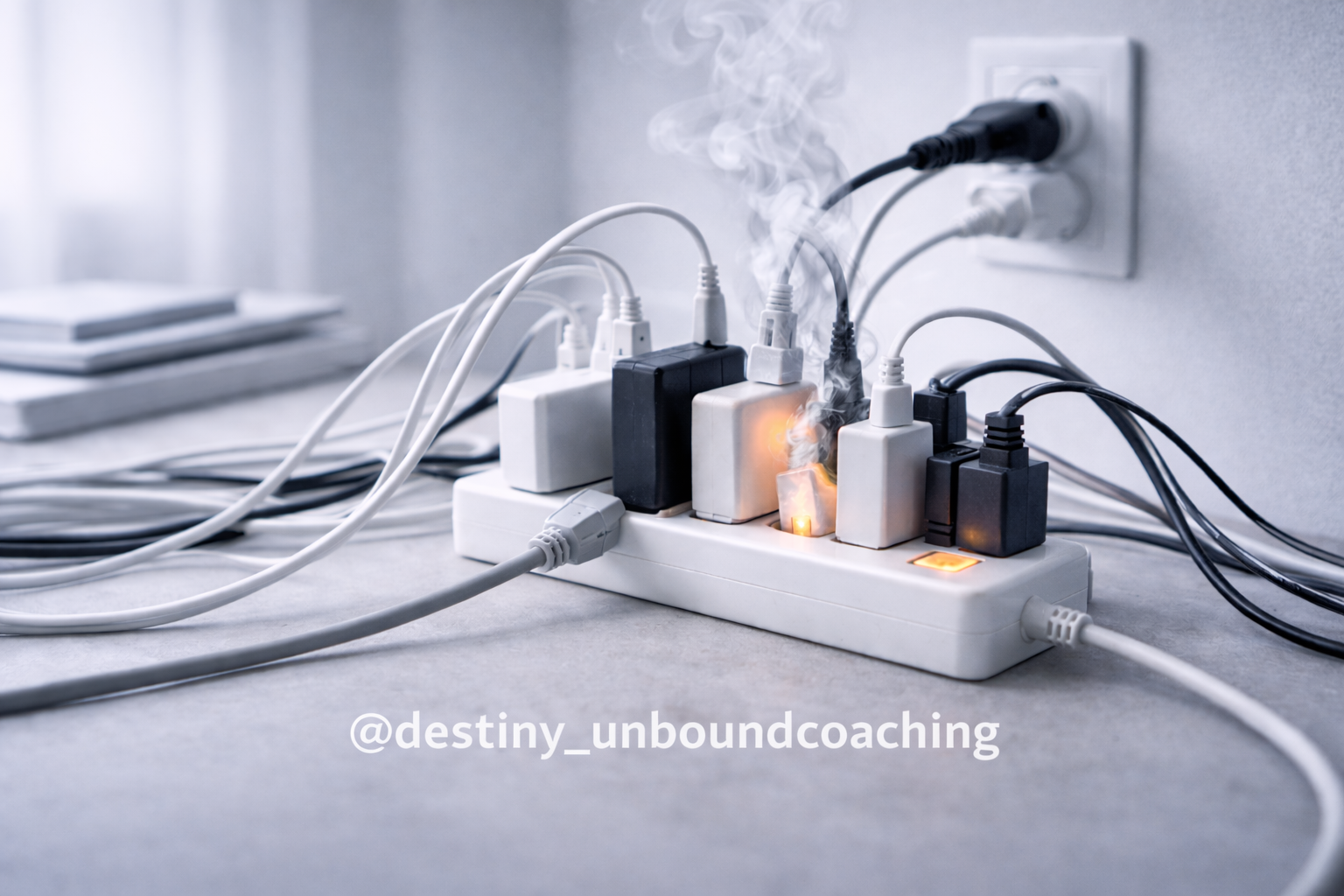
A close-up image shows an overloaded power strip plugged into a single wall outlet, with multiple cords connected and one plug overheating and smoking. The image represents how a business built around one nervous system becomes strained, unstable, and vulnerable to breakdown.
The business runs because you’re alert.
Focused.
Always on.
If you slow down, things wobble.
If you step away, decisions stall.
If you’re off, the whole place feels off.
That’s not leadership.
That’s a business that learned to rely on your vigilance instead of structure.
This is usually where someone books a Free Session — not because they’re lost, not because they want reassurance, but because they’re starting to see the problem clearly:
the business doesn’t actually function without them managing everything.
What you’ve built is a business that only works when you’re regulated, available, and paying attention — which means the system itself never had to grow up.
When a business is built around
When a business is built around one nervous system, it doesn’t run on roles, systems, or authority.
It runs on your internal state.
If you’re calm, things move.
If you’re stressed, everything tightens.
If you’re unavailable, people wait.
Not because they’re incapable.
Because the business trained them to.
This doesn’t look broken from the outside.
It looks “hands-on.”
It looks “efficient.”
It’s also fragile as hell.
This pattern shows up constantly in family businesses where roles were never clearly defined, which is why The Family Business Role You Never Agreed To—but Can’t Escape hits so hard once you see it.
Why does a business built around one nervous system feel efficient at first?
Because it is.
You move fast.
You catch problems early.
You anticipate issues before they land.
People don’t have to decide much — they read you instead.
And before you argue with me: yes, you are good at this.
That’s the problem.
Speed replaces resilience.
Responsiveness replaces responsibility.
I’ve been the person responsible for decisions, operations, and fallout in a business where I knew that if I didn’t stay regulated and available, everything would stall and someone else’s mistake would land on my desk anyway.
The business never learns to regulate itself
Here’s the part you’re already pushing back on.
When you’re the regulator:
People defer instead of deciding
Tension routes to you instead of surfacing
Problems wait for your availability
Yeah, I know how this sounds.
You’re already thinking, someone has to be on top of things.
True.
But if only one person can be, that’s not leadership.
That’s dependency.
And no amount of “being capable” fixes a structure that can’t hold itself.
The business mirrors your nervous system instead of containing it
This is where exhaustion shows up.
If you’re anxious, the business tightens.
If you’re overfunctioning, everyone else underfunctions.
If you’re watching everything, initiative quietly dies.
Not because people are lazy.
Because the system learned you’ll catch it.
You’re not just running a business.
You’re managing the emotional climate of it.
That’s why this doesn’t turn off at night.
And why burnout creeps in even when things “look fine.”
Calm becomes your job instead of the system’s job
In a healthy business, calm comes from structure.
In a business built around one nervous system, calm comes from you.
You regulate so others don’t have to.
You stay composed so nothing unravels.
You hold it together so no one else has to grow up.
People call this leadership.
It
Leadership is building something that doesn’t fall apart when you’re human.
If you want to see just how dependent the business is on you, the No-BS Assessment makes it obvious without sugarcoating it.
When you try to step back and everything slows down
This is the moment it clicks.
You take a day off — decisions pile up.
You stop anticipating — mistakes suddenly appear.
You pull back — and people wait.
That’s when you realize the truth:
The business doesn’t actually know how to operate without you regulating it.
This is not for reassurance-seekers
This isn’t for people who want to be told they’re high-capacity, indispensable, or “just really good at what they do.”
It’s for people who can feel that the business has been built around their nervous system — and are done being the stabilizer for everything.
A business shouldn’t need your nervous system to survive
Being capable kept things running.
Being vigilant kept things smooth.
But if the business only works when you’re regulated, available, and on edge —
That’s not strength.
That’s a liability you’ve been carrying alone.
Written by Jillian Smith, M.A., Founder of Destiny Unbound Coaching